April 26, 2026
The Future of Mental Health Care: Why Combining Medication and Therapy Delivers Better Results
The Future of Mental Health Care: Why Integration Matters
Mental health care is evolving—and for good reason.
For years, many people experienced treatment as either medication-only psychiatry or talk therapy alone. But real-life mental health challenges are more complex than that. Anxiety, depression, trauma, and stress don’t exist in isolation—and neither should treatment.
Today, the most effective approach is integrated psychiatric care, where medication management and psychotherapy work together to deliver better, faster, and more sustainable results.
Why One-Size-Fits-All Treatment Doesn’t Work
Traditional models often fall short:
- Medication alone may reduce symptoms—but not address root causes
- Therapy alone may help insight—but not stabilize severe symptoms
- Short, rushed appointments limit real progress
Modern psychiatry recognizes that mental health is both biological and psychological.
That’s why leading practices now combine:
- Brain chemistry support (medication)
- Behavioral and emotional support (therapy)
- Lifestyle and stress management
This whole-person approach leads to deeper healing—not just temporary relief.
What Is Integrated Psychiatric Care?
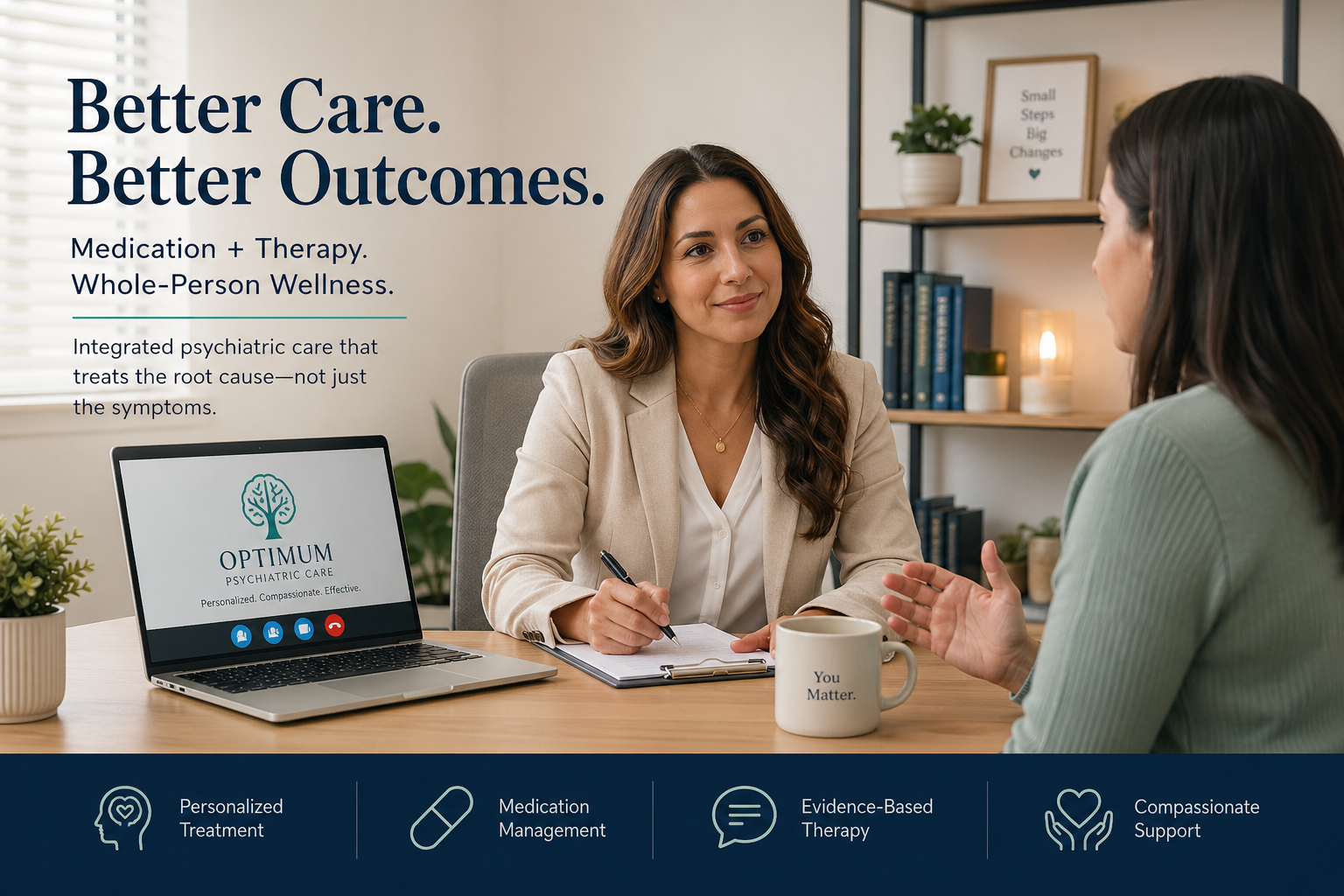
Integrated care means you don’t have to choose between medication and therapy—you benefit from both, working together.
1. Personalized Evaluation
Every patient begins with a comprehensive assessment to understand:
- Symptoms
- Lifestyle factors
- Medical history
- Emotional triggers
This ensures your treatment is tailored—not generic.
2. Medication + Therapy Together
Instead of separating treatments, both are used strategically:
- Medication helps regulate mood, focus, and anxiety
- Therapy helps change thought patterns and behaviors
Together, they reinforce each other.
For example:
- Therapy works faster when symptoms are stabilized
- Medication works better when emotional triggers are addressed
3. Ongoing Monitoring & Adjustment
Mental health is dynamic.
Integrated care allows providers to:
- Adjust medications safely
- Track emotional progress
- Refine treatment based on real results
This leads to better long-term outcomes.
Conditions That Benefit Most From Combined Treatment
Integrated psychiatric care is especially effective for:
- Anxiety disorders
- Depression
- ADHD
- Trauma and PTSD
- Bipolar disorder
- Stress-related conditions
These conditions often involve both brain chemistry and behavioral patterns, making combined treatment essential.
The Role of Telehealth in Modern Psychiatry
One major breakthrough in mental health care is telehealth.
With secure video sessions, patients can:
- Access care from anywhere
- Maintain consistency in treatment
- Reduce stress from travel or scheduling
Telehealth has made mental health support more accessible than ever—without compromising quality.
Why Patients Are Choosing Integrated Care
Patients today are looking for more than quick fixes.
They want:
- Real understanding
- Personalized attention
- Long-term results
Integrated psychiatric care delivers that by:
- Treating the root cause—not just symptoms
- Combining science with human connection
- Creating sustainable mental wellness
What Makes a High-Quality Psychiatric Provider?
When choosing a provider, look for:
- A personalized treatment approach
- Willingness to combine therapy and medication
- Clear communication and patient involvement
- Consistent follow-up and support
Avoid clinics that:
- Rush appointments
- Focus only on prescriptions
- Don’t offer therapy integration
Take the First Step Toward Better Mental Health
Mental health improvement isn’t about choosing between medication or therapy—it’s about using the right combination for your unique situation.
If you’ve tried one approach without success, it may not mean treatment failed—it may mean your care wasn’t fully integrated.
The right support can make all the difference.
Call to Action
Ready to take control of your mental health?
Book an appointment today and experience a personalized, integrated approach designed to help you feel better—faster and sustainably.